

It is perfectly legal for foreigners to buy & own Mexican real estate. Beyond the somewhat tedious process of setting up a bank trust (fideicomiso), buying property in Mexico as an American or Canadian is fairly straightforward. With a relatively low budget, you can purchase a beach property in Mexico (a house or a condo) that you’ve always dreamed of! All it takes is a little research and due diligence. Below we’ll cover everything you need to know to get started on purchasing real estate as a foreigner and expat condo ownership in Mexico.
Can Americans buy property in Mexico?
It’s time to put an end to the most enduring myths about buying property as an American or Canadian and if it is even possible to own a condo in Mexico.
Mexican citizens are able to buy properties anywhere within the country, but foreigners face some extra fees when purchasing in some of the more desirable areas. Properties within 50 km of the coast or 100 km from a border will have to purchase the property(a house or a condo) through a trust with a Mexican bank known as a fideicomiso.
International buyers are encouraged to work with a notary as they figure out all the paperwork and documents needed to create the fideicomiso. Thefideicomiso is a renewable 50-year trust that costs on average $600 per year, and is set up during the closing and title point of the sale.
It should be noted that all real estate transactions in Mexico require the involvement of a Notario Público for all the paperwork and documentation requirements. These notaries have significantly more experience and responsibility than a typical notary public in the United States and thus the two should not be confused.
While the process may vary, the general process for a Canadian or US Citizen buying property in Mexico’s “restricted zone” should be:
- Find your dream property (a house or a condo) and make an offer.
- Sign the initial sales agreement to sell/buy. A 5%-10% deposit is usually expected from the buyer for pre-construction, and 40% is the minimum for already built property. The legally binding contract is in Spanish and should be written by a Mexican lawyer.
- Send your deposit via wire transfer, along with any other sequential payments as outlined in the terms of your sales contract.
- Once you have paid the full balance for the property, the seller contacts your bank to start the trust application for your fideicomiso. Many times you are able to take posession of the property at this point.
- Pay closing costs, taxes, & fees. Closing costs average around 6% in Jalisco and Nayarit. See our closing costs calculator.
- Within 3 months of your closing date, the Public Registry issues the final deed (escritura) to your property and the property is officially yours.
The whole process of registering a property can be completed in 45 – 100 days. The process may be slightly different depending on the type of property; e.g. pre-construction deals, beachfront properties, land purchases, etc.
What is a fideicomiso?
A fideicomiso is a trust that allows a Canadian or American to buy property in Mexico with all the rights of a Mexican citizen. This is a safe, legal, and extremely common vehicle for foreign ownership of real estate in Mexico. Sell it, rent it, build on it, live on it, or pass it down to your heirs… the choice is yours!
- It can be held by one or more individuals. This means that a husband and wife can be co-owners. Owners can also list an heir.
- It lasts for 50 years and after that, it is renewable by the owner or their heirs. This means that ownership does not expire as long as it is renewed.
- The trust is easily transferrable when an owner is ready to sell.
- With a single fideicomiso, international owners can hold multiple properties in Mexico.
- Fideicomisos do add some time and cost to the buying process. The setup costs range from $500 to $1,000 USD and maintenance fees cost around $500 to $700 USD per year.
Buying Property via a Corporation
A Mexican corporation can be formed in two weeks with at least two partners. (They can both be foreigners; no Mexican citizen is needed, so don’t fall for that story.) It costs a maximum of $1,500 USD and from there you can use it to acquire property through a normal transaction as a Mexican national would. So in a month and a half, you can have the corporation formed and the property under its name. You can also buy a car and pretty much anything you want with it. But price and speed are the only benefits of a corp.
The corporation ties you to an accountant for life. Even if it reports zero income, an accountant will charge you a fee. To act on behalf of the corporation as a partner you need to get your resident status, otherwise you will have to act through powers of attorney given in the corporation to Mexicans (which means that somebody else will have, for lack of a better word, control of your money, land, car, and everything you buy or do through a corporation). Everything, and we mean everything you buy through a corporation, has to be done through a check and or wire transfer made from the corporation bank account, so cash is not an option. And finally, the biggest downside: there is no way to avoid capital gains when selling the property. If you manage the property properly and get fiscal receipts for everything you do in the house, you can deduct that against the profit at the time you sell to lower the tax bill, but you can´t avoid it completely.
That makes this the best option for people interested in starting a business. If you intend to open a business or even buy property for a non-residential reason, a corporation is the best route. It will save you some money on income tax, and most of all, it will allow you to create a legal source of income in the country.
Our opinion:
In our opinion, a Fideicomiso is the way to go if you plan on buying property in Mexico and using it for residential/personal reasons that will not generate any major income. If you intend to open a business or if you’re buying the property (or multiple properties) to function as a business, then you will want to form a corporation.
Closing Costs
Before buying real estate in Mexico, make sure you are considering the closing costs into your budget. Real estate closing costs in Mexico consist of various fees and expenses. They generally total between 4% to 6% of the purchase price. These costs are always the responsibility of the buyer. The seller, on the other hand, will have to pay other real estate fees and their capital gains taxes.
Property taxes in Mexico
- Transfer Tax: A 2% acquisition tax is payable by the buyer when the property changes ownership to them. This is part of the closing costs.
- Property Tax: This is called predial, and the average cost is approximately 0.1% of the assessed value of the property at the time of sale.

How to send the payment?
If you’re planning to pay your down payment or full payment from a non-mexican bank account, you’ll want to keep an eye on the exchange rate and associated fees from your bank. Most property is listed in USD, so no matter what, you will have to ask your bank to convert to USD before sending the transfer.
Wire transfers are the gold standard and are sometimes the only available method when sending payments to purchase property in Mexico, and are also very secure. If the amount is not greater than $10K USD, we suggest using Wise.com as they consistently offer the best exchange rates and the lowest fees.
Property Purchases in Mexico and Escrows
Escrow accounts are fairly a new thing in Mexico, adopted from the US and Canada. This really depends on the seller, and if the seller wants to arrange these services. If a seller does not wish to set up the escrow, but the buyer requests it, then many times the buyer is responsible for the escrow setup fees ($600-$800 USD). Escrow is rare when it is a single-family home or a direct sale by owner of a property that is already built. Escrows are more common in pre-construction or pre-sale properties, but even then they are typically are only offered to buyers towards the last 25% of a new project being complete.
To sum it up, don’t be afraid if a seller or developer doesn’t offer escrow. A lot of Americans or Canadians that are in Mexico will tell you “don’t buy unless there’s escrow!”, and that’s good general advice, but it is still a new thing in Mexico, and until it is more widely adopted you won’t see it very often. So, if you find your dream property and they don’t offer escrow, it’s not a deal-breaker. There are other ways to make sure your purchase is safe.
Sending less than $5000 USD to MXN
For amounts below $5000 USD, we always use Wise (formerly Transferwise). Wise.com offers the best exchange rate to send money to Mexico since they are independently provided by Reuters, guaranteeing fair and low-cost money transfers. Based on our past experience with them, the recipient’s Mexican bank account usually gets the money transfer within 3 days.
We personally use them at least once a month to send our HOA fees, and we used them to send the payments for both of our property purchases in Mexico!
Sending more than $5000 USD to MXN
If you are sending amounts higher than $5000 USD, the cheapest way to send money would probably be a wire transfer directly with your bank.
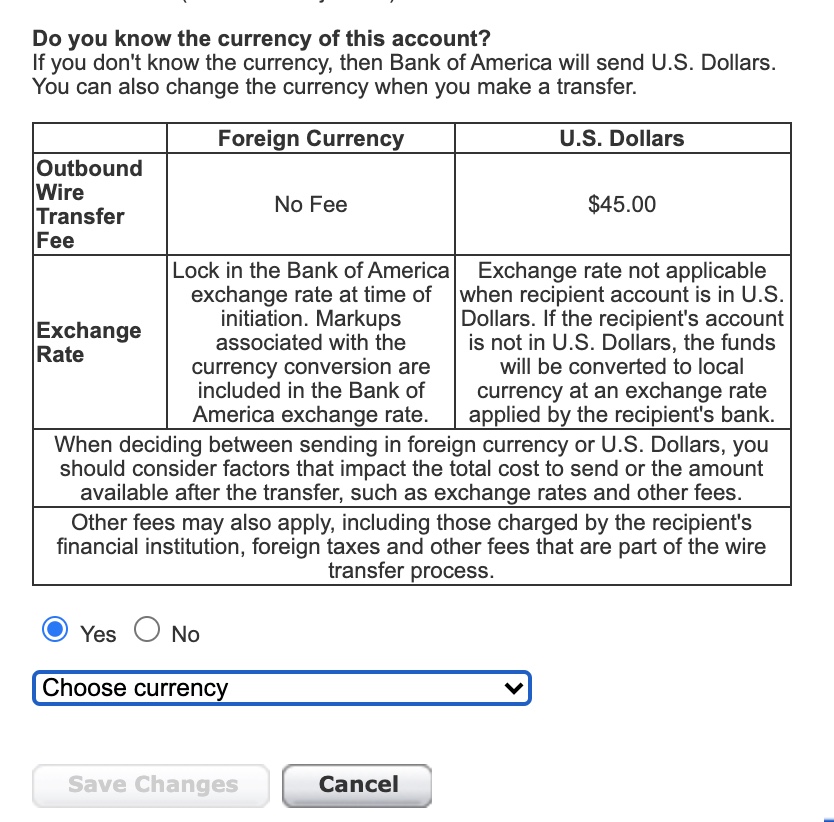
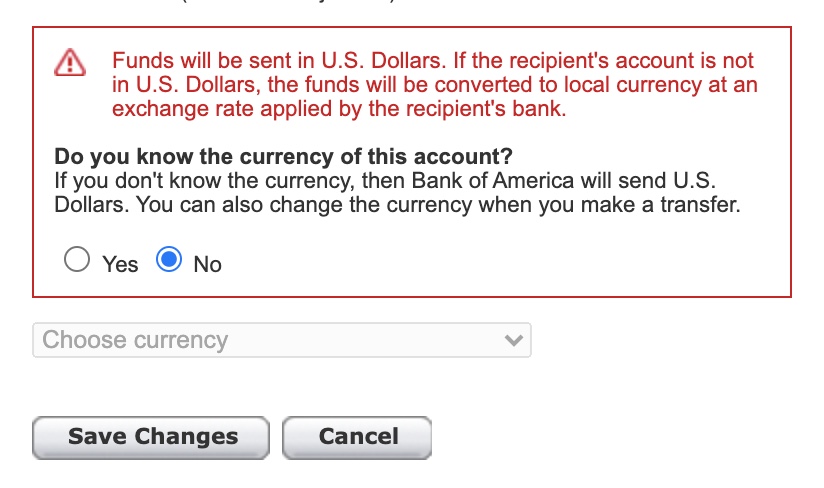
When making the wire transfer, select “SEND IN USD” or choose “I do not know the currency of the receiving account”. Banks want you to accept their terrible exchange rates. For example, for a $55,000 USD wire transfer, the bank wanted me to accept their terrible exchange rate, which (after crunching the numbers) would have cost me over $1500 for sending the money. Instead, simply send the amount in USD, pay the one-time fee (in my case it was $45 USD), and the funds will be converted to local currency at an exchange rate that’s set by the receiving bank. See example below:
Do you really need a realtor?
A realtor can help you get a grip on the market (see our trends article!) and narrow down options based on your criteria since it can be a challenge for buyers to search for properties on their own, especially if they are not in the area themselves. If you are not familiar with the area and want to be shown around, a realtor is worth it. If you are going directly to the developers of exclusively pre-construction and pre-sales, it won’t help too much since you’ll be able to get all the info you need directly from the source. It just depends on if you want another person in the mix.
Mexico and MLS
There is an MLS system in Mexico, but it does not have all available listings like Zillow or Realtor.com in your home country. A lot of sellers or developers don’t want to put up their property on MLS because to do so would require a realtor, and in the Banderas Bay area realtors take 8% of the sale, which is double the amount that you would see in the rest of Mexico. So most of the time developers will hire an internal sales team because it’s cheaper for them and they can keep all communication in one place.
If a property is not listed on MLS, it’s not a red flag. MLS is relatively new in Mexico, and since hiring a realtor is so expensive in the Puerto Vallarta area, many sellers here opt not to list their place with a realtor. And if they do, they’ll raise the price to make up for that expense! However, there is something to be said for a seller that is willing to list the property with a broker/realtor and eat that cost – it could show that they are serious about the sale, and is a sign that everything is in order to sell. It could also show that they were never able to sell the property on their own, and there could be an underlying reason for that. We wouldn’t generalize that all direct-sale-by-owner deals are not serious or legit though, it’s just something to think about. There’s always so much to think about!
What to look for in a realtor
Our number one piece of advice is to contact an agent who not only knows the market and the inventory, but can also guide you through the legal, tax, and immigration requirements for foreigners. Try to find a real estate agent or buyer’s agent that has been established in the area for at least 2 years. It may also be wise to hire a local real estate attorney to coordinate the closing on your behalf.
Important Tip: Realtors in this area will be reluctant to show you a property that does not give them a full commission, so you could potentially miss out on some great opportunities.
Should you hire your own lawyer?
A notario in Mexico is an experienced lawyer who has been licensed by the Federal Government and the State, but the notario does not represent you. They are an unbiased representative of the government that finalizes and verifies all real estate transactions. They will perform a complete title search on the property, researching the chain of ownership, confirming the sell
